Preprint, 2026
FOCUS: Active Critic Learning for Long-Horizon Language Model Agents
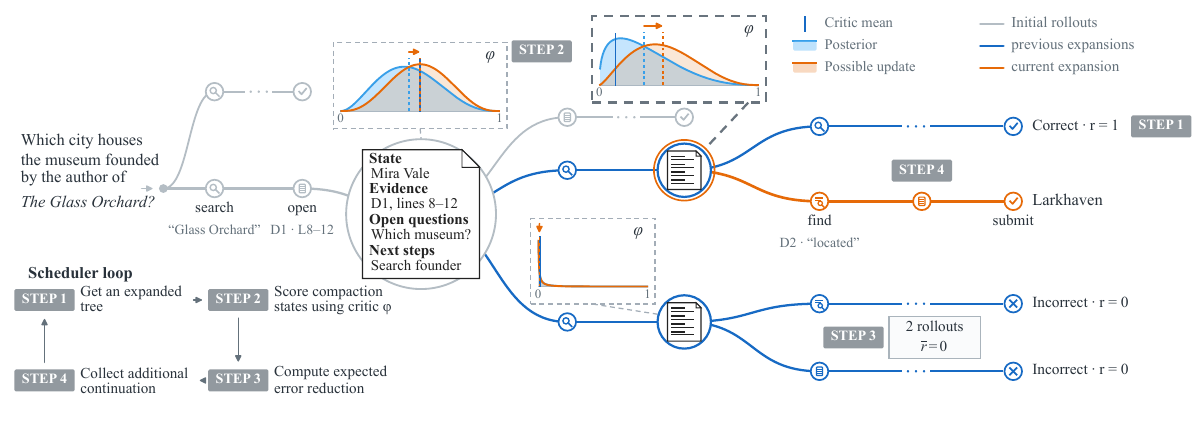
Allocate extra rollouts where they are expected to correct the critic most, improving credit assignment for long-horizon agents.
Learning, evaluating, and making decisions under uncertainty.
Allocate extra rollouts where they are expected to correct the critic most, improving credit assignment for long-horizon agents.
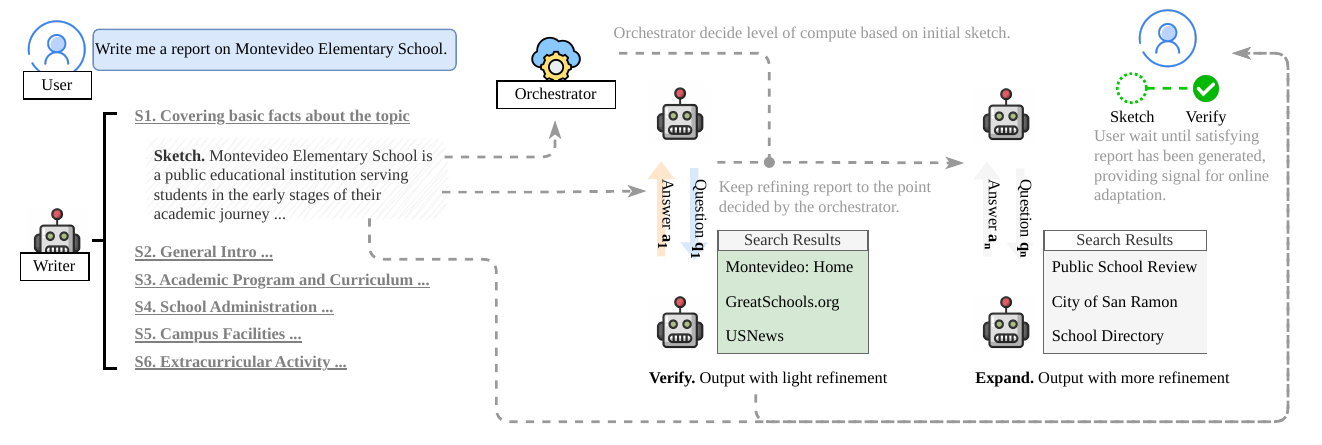
Predict when more research will improve a report section, and allocate computation to the sections that benefit most.
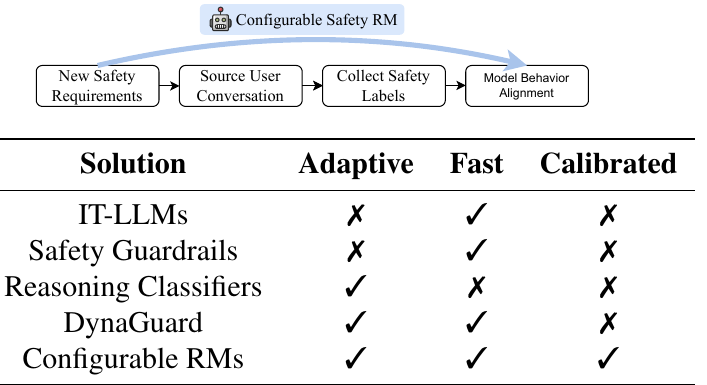
Train a calibrated reward model that follows changing safety guidelines and guides the balance between helpfulness and safety.
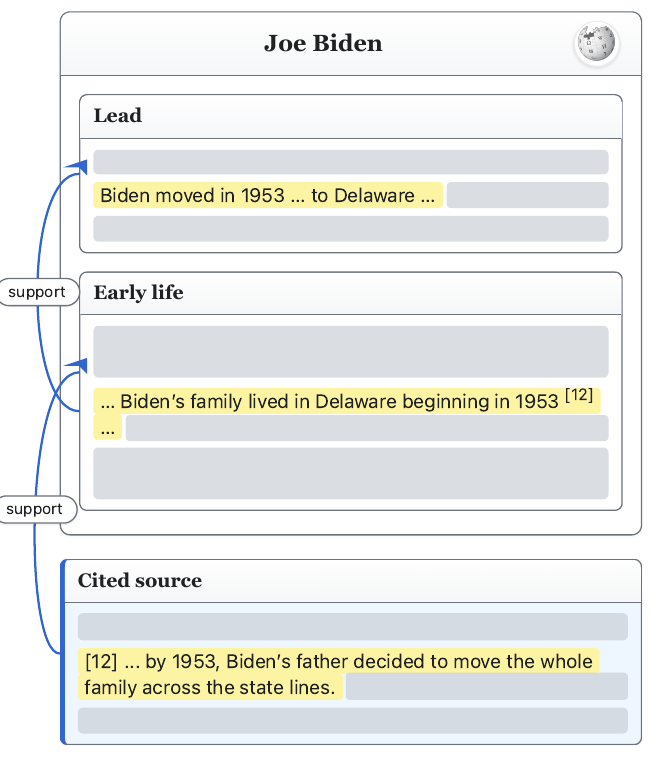
Trace Wikipedia claims through article text to cited sources, and evaluate whether retrieval can recover the supporting evidence.
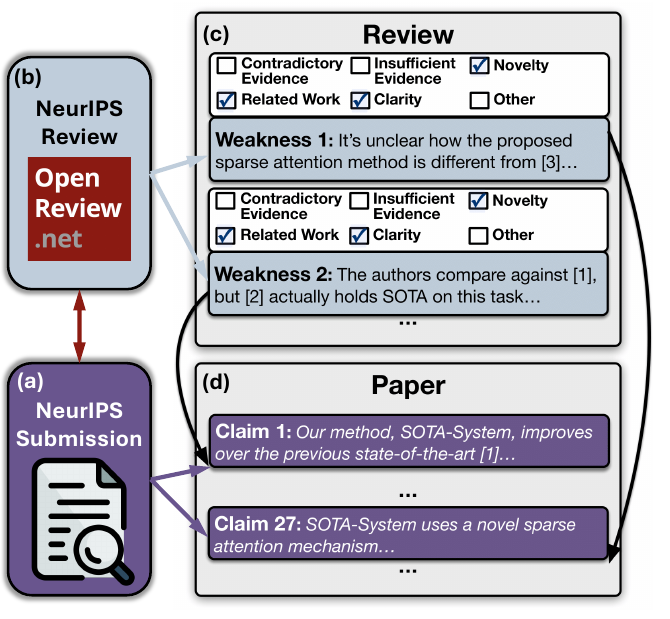
Ground scientific critiques in the specific claims they challenge, then evaluate their validity and specificity.
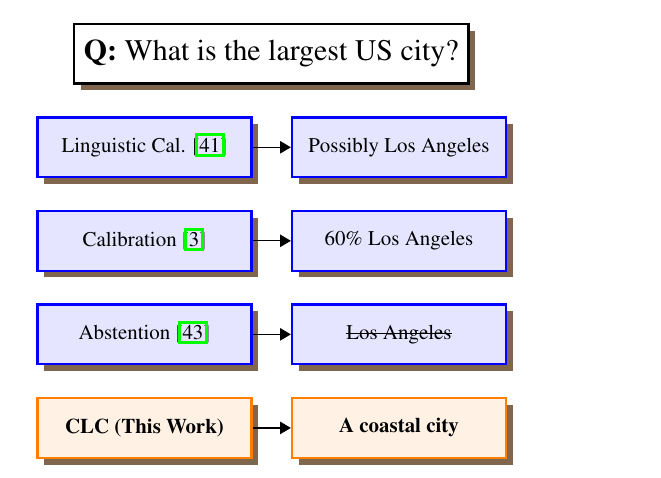
Express uncertainty by making claims less specific, with conformal control over factuality and learned uncertainty-aware rewriting.
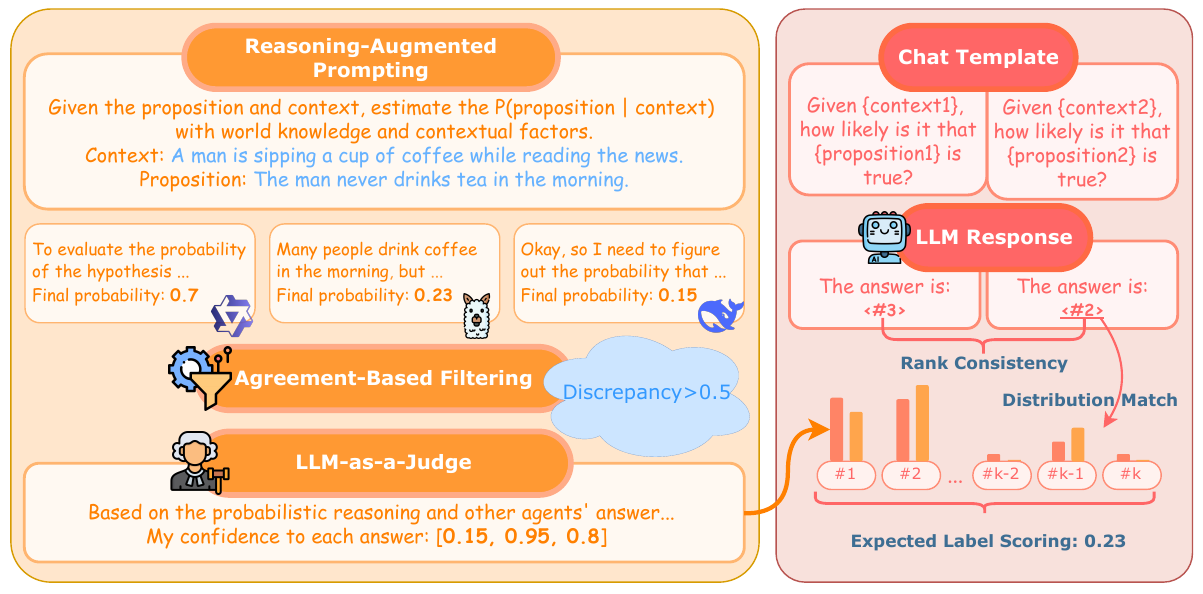
Train language models to estimate fine-grained conditional probabilities using human judgments, synthetic data, and ranking supervision.
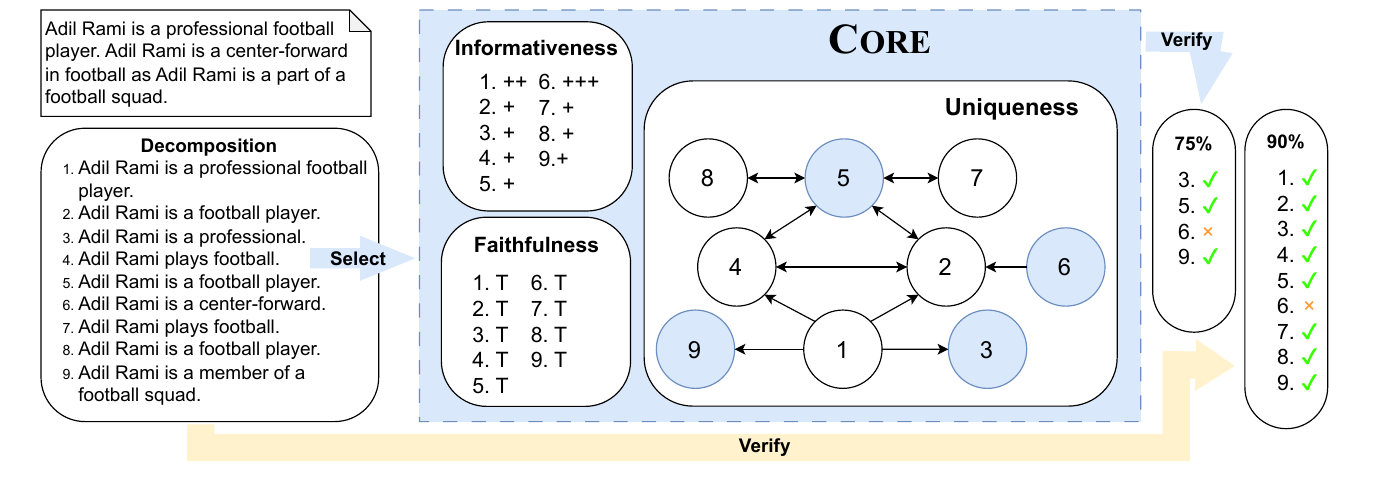
Select informative, nonredundant subclaims so factuality scores cannot be inflated by trivial or repeated statements.
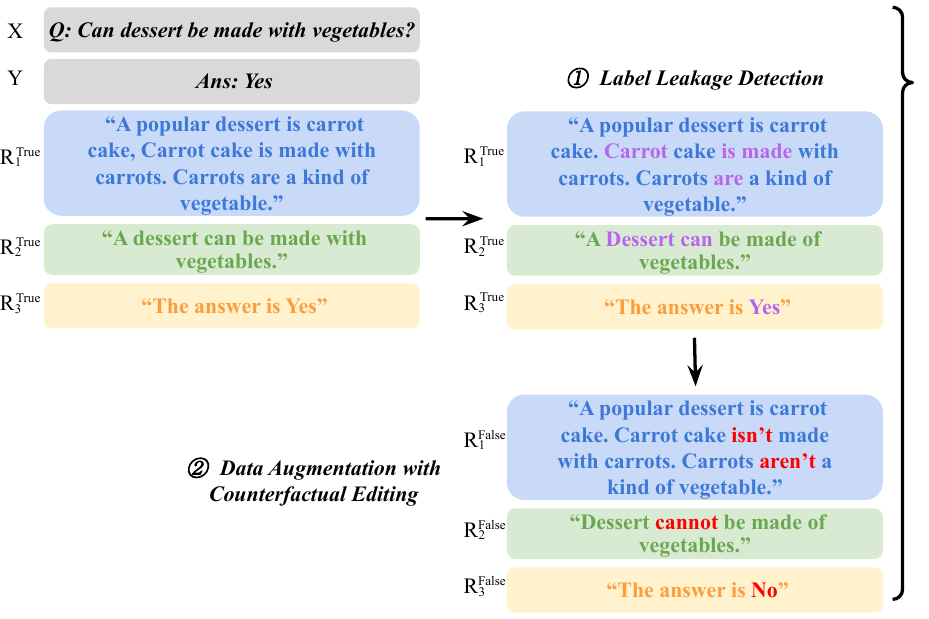
Evaluate what a rationale explains beyond the answer itself, while resisting shortcuts caused by label leakage.
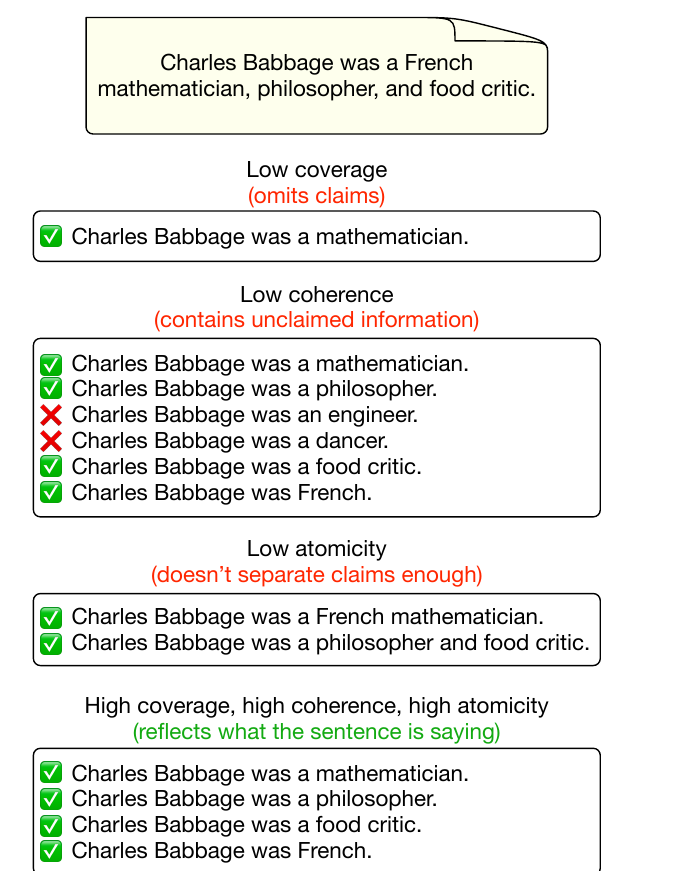
Separate errors in claim decomposition from errors in factuality, and assess whether subclaims faithfully represent the original text.
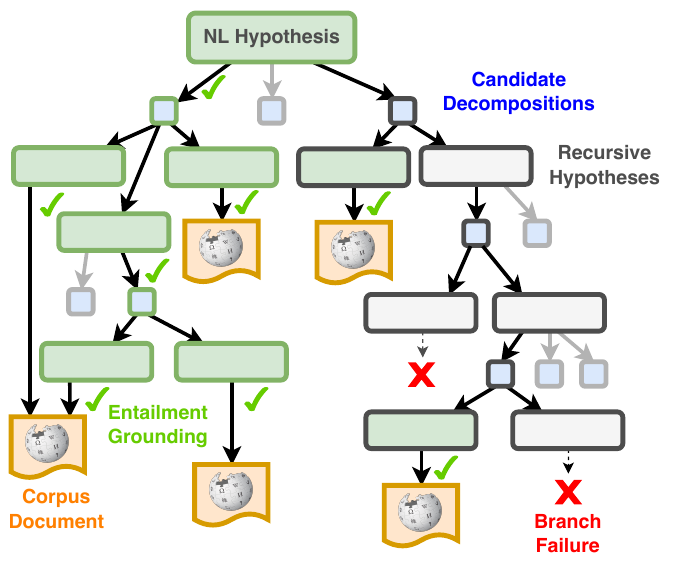
Use principles from informal logic to judge reasoning steps and construct better-supported entailment trees.
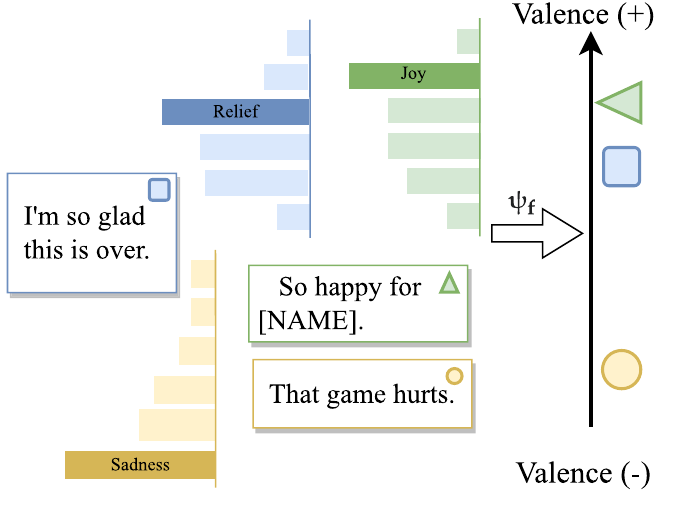
Assess calibration at the instance level using scalar human judgments, avoiding dependence on arbitrary confidence bins.
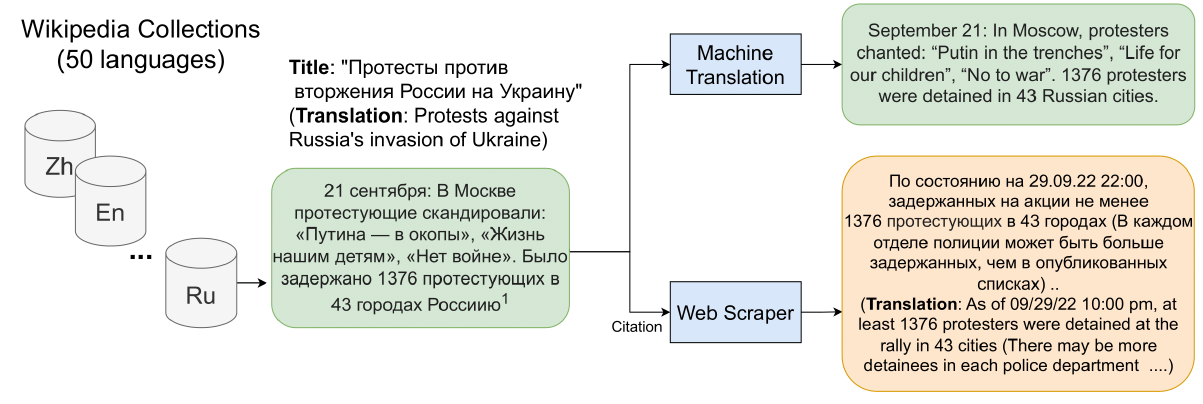
Link Wikipedia passages to their sources across 50 languages to support evidence-grounded retrieval and report generation.
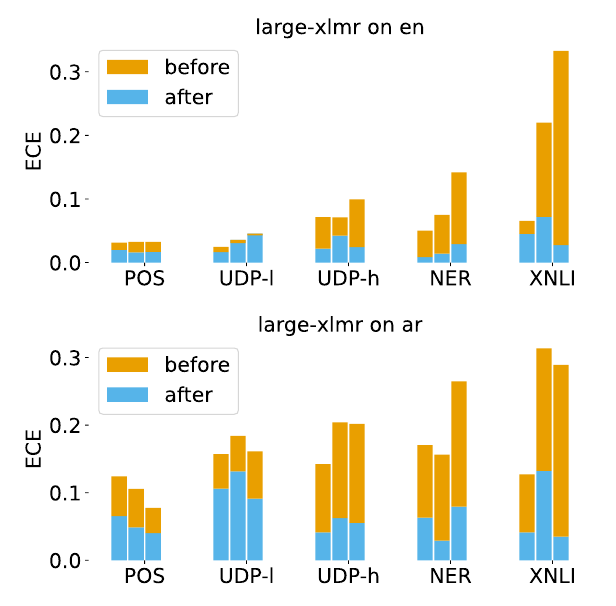
Study how calibration changes across languages and which recalibration methods transfer across structured and unstructured tasks.

Construct a dataset of self-reported hospitalization periods and study prediction from preceding social-media language.
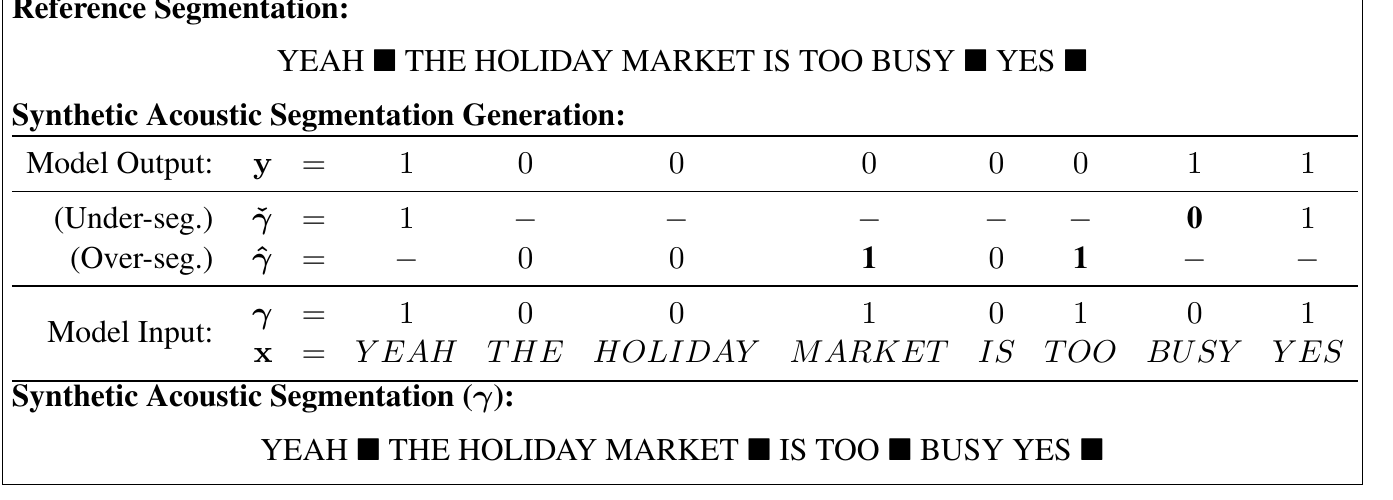
Use subtitles and simulated boundary errors to train models that repair speech-recognition segmentation before translation.
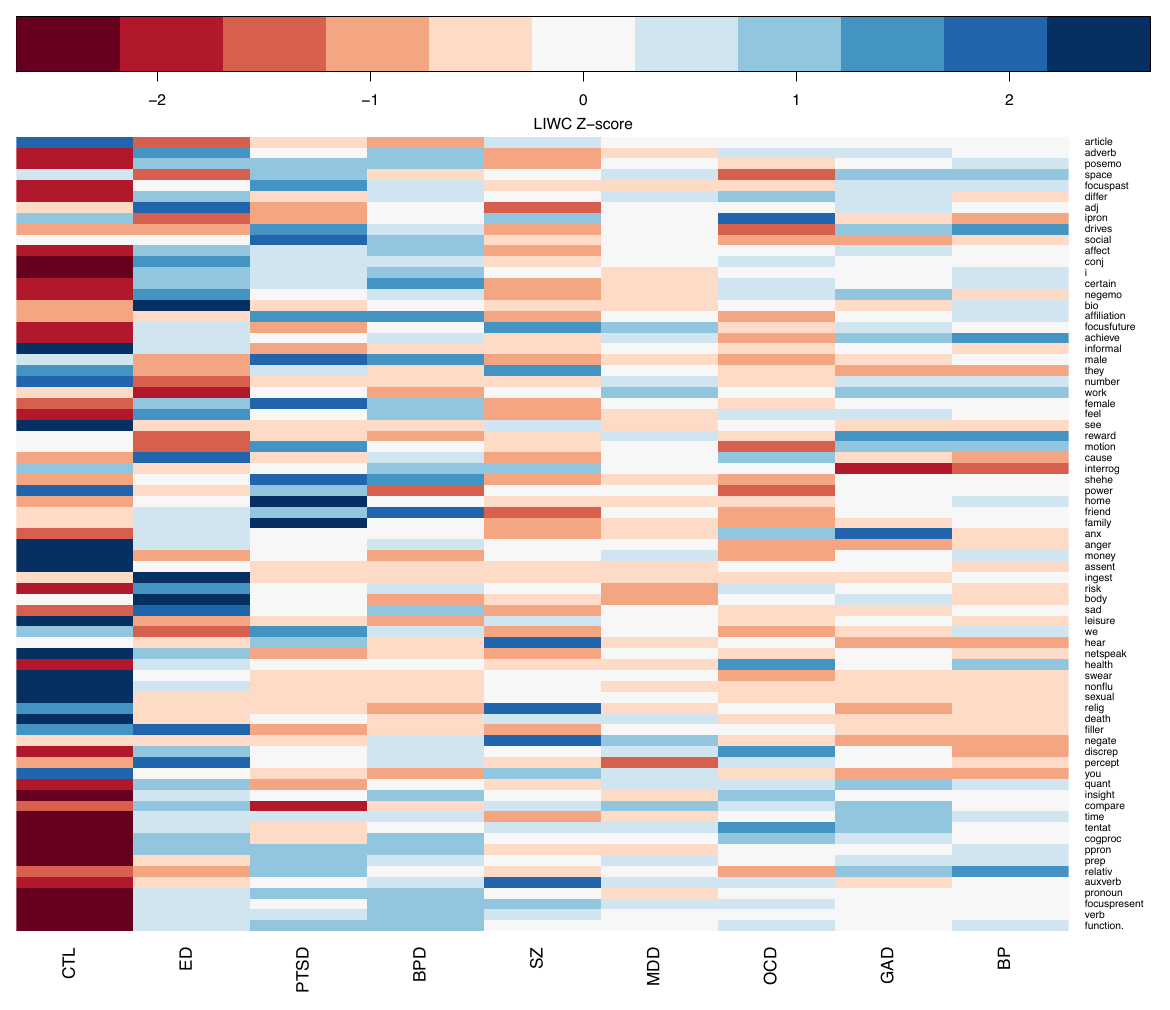
Model Reddit language with contextual representations to study mental-health classification at both post and user levels.

Learn sentence boundaries from subtitles and noisy syntax to improve low-resource speech translation and retrieval.
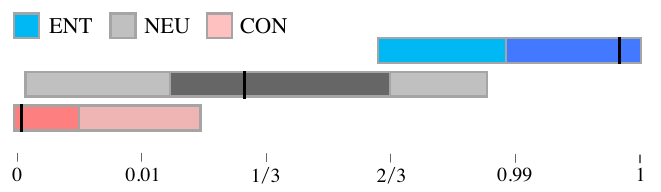
Replace categorical entailment labels with human probability judgments about whether a hypothesis follows from a premise.
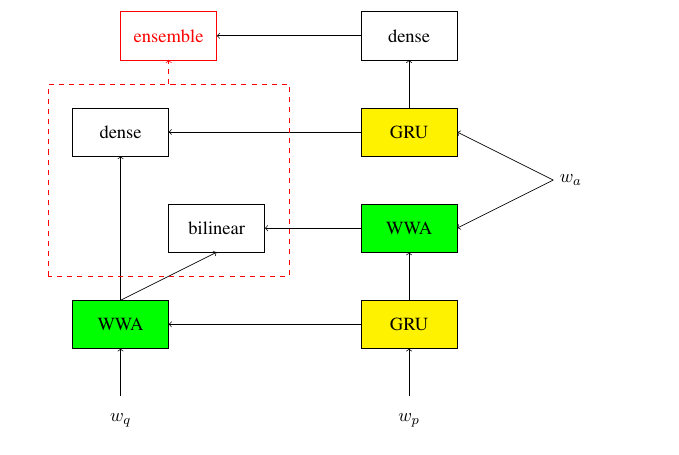
Frame multiple-choice reading comprehension as textual entailment, combining contextual representations with commonsense information.